7 hr
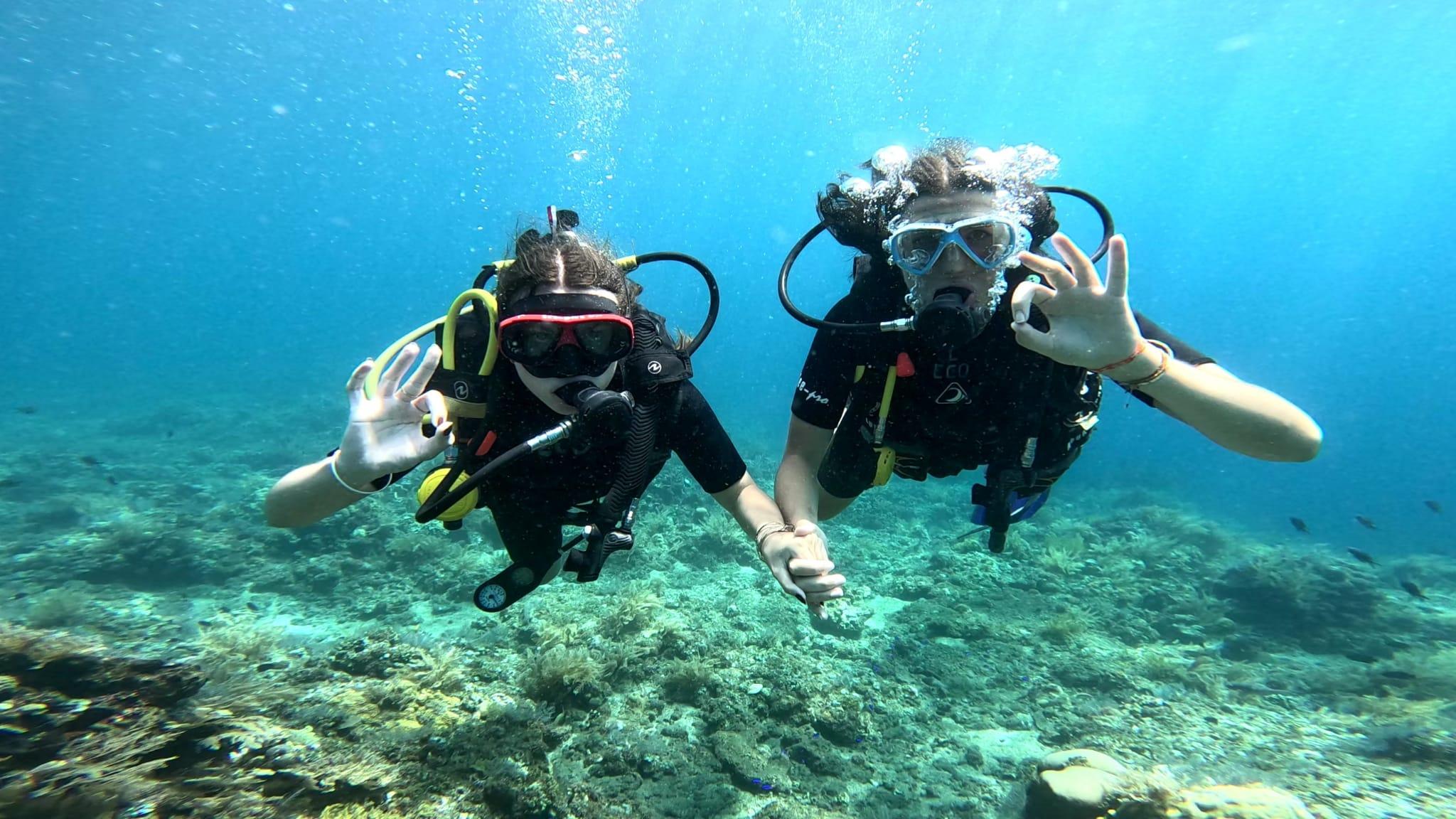
Blue Lagoon Beginner Scuba Diving Adventure
- Expert local guide
- Small group
- Skip-the-line access
- Free cancellation
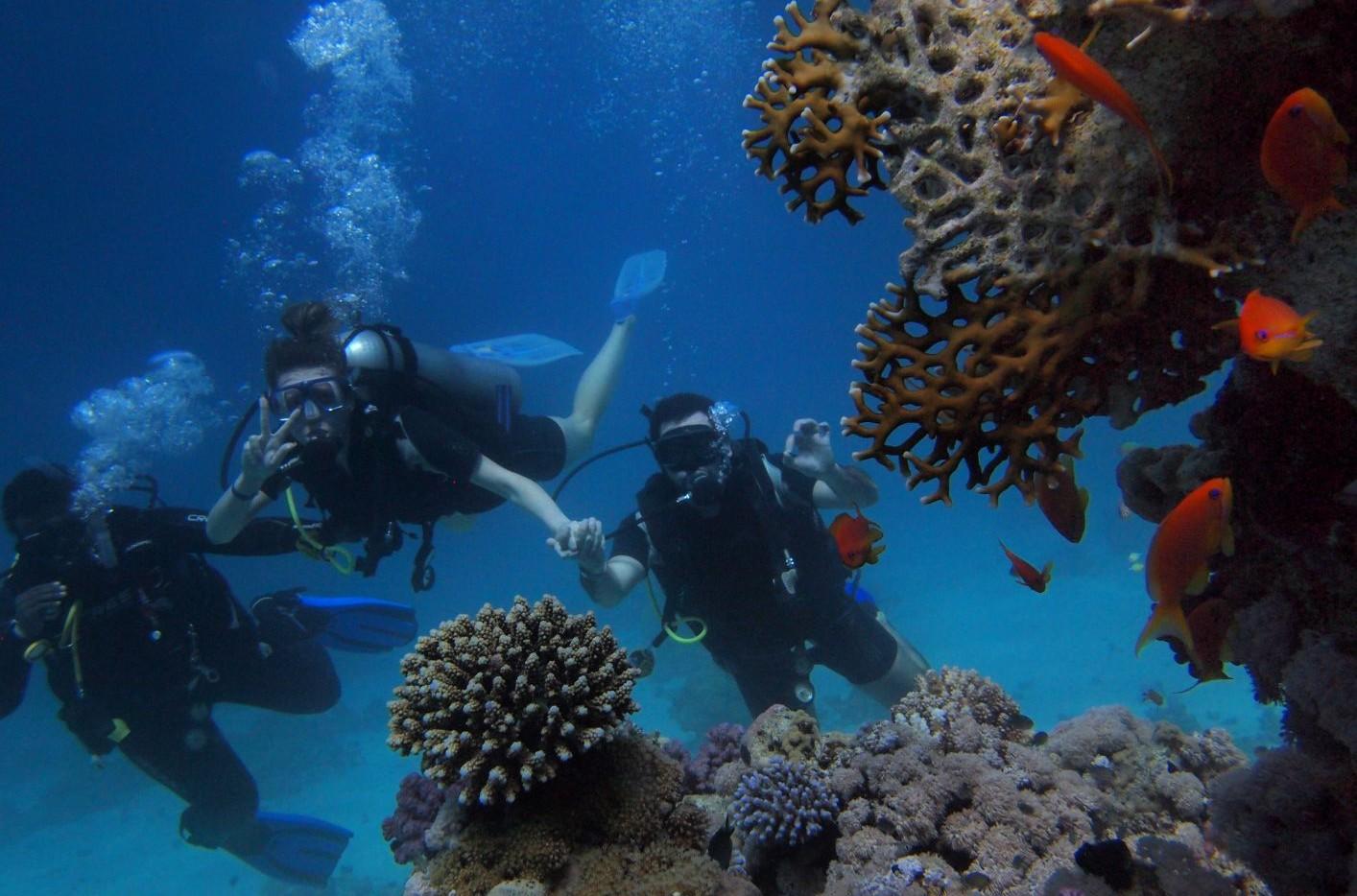
Diving in Bali — Coral Reefs, Wrecks & Year-Round Underwater Exploration
Where volcanic drop-offs meet tropical currents, where manta rays glide through blue water stations
Compare fares, pick the fit — all bookings are mobile-voucher and eligible for free cancellation where shown.
7 hr
9 hr
9 hr
| Experience | Duration | Rating | Pickup | Skip-the-line | Guide | Small group | Price | |
|---|---|---|---|---|---|---|---|---|
|
Guided Experience
Most popular
Blue Lagoon Beginner Scuba Diving Adventure
|
7 hr | ★ 4.9 | ✓ | ✓ | ✓ | ✓ | €109 | Book → |
|
Guided Experience
Tulamben Bay Introductory Scuba Diving Adventure
|
9 hr | ★ 5.0 | ✓ | ✓ | ✓ | ✓ | €105 | Book → |
|
Guided Experience
Tulamben USAT Liberty Wreck Dive Adventure
|
9 hr | ★ 4.9 | ✓ | ✓ | ✓ | ✓ | $109 | Book → |
Diving in Bali provides a richer variety of underwater topography, while the Gili Islands are consistently more rewarding for those prioritizing frequent encounters with sea turtles. Most visitors find that booking diving in bali tours offers the broader marine biodiversity, whereas the Gili Islands offer a more relaxed atmosphere for recreational submersion.
|
Top pick Bali |
Gili Islands | |
|---|---|---|
| Marine life highlights | Mola-mola and macro life | High density sea turtles |
| Current intensity | Moderate to strong currents | Generally mild to moderate |
| Diving site diversity | Wrecks, reefs, and muck | Wall and drift dives |
| Accessibility from mainland | Direct island access | Requires fast boat transfer |
| Ideal experience level | Intermediate to advanced | Beginner to intermediate |
| Underwater visibility | Variable by season | Consistently clear |
| See tickets & prices |
Verdict: Choose the Gili Islands for effortless turtle sightings, or opt for a diving in bali tour if you prefer diverse ecosystems ranging from muck diving to expansive coral reefs.
Hand-picked experiences loved by thousands of travelers
3 days
Free Cancellation
Earn your diving certification with pool training, boat dives at Blue Lagoon, and a wreck exploration
8 hours
Free Cancellation
Full-day scuba trip exploring three premier dive sites with manta rays, seasonal sunfish, and vibrant reefs
5 hours
Free Cancellation
Learn to dive in shallow waters, then explore a legendary wartime shipwreck lying off Bali's volcanic coast.
4 hours
Free Cancellation
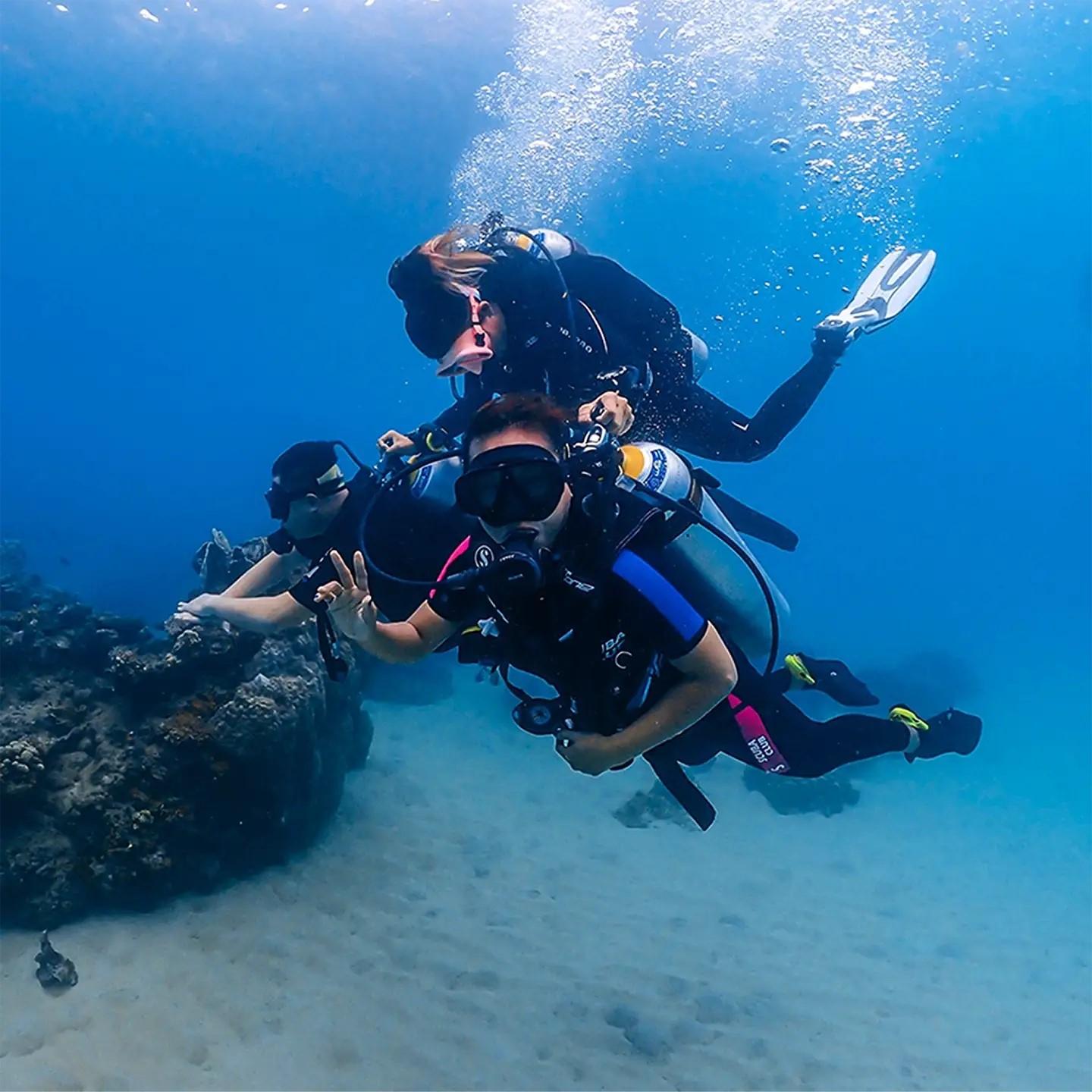
Discover underwater breathing in Bali's beginner-friendly waters with personalized instruction and two reef dives.
8 hours
Free Cancellation
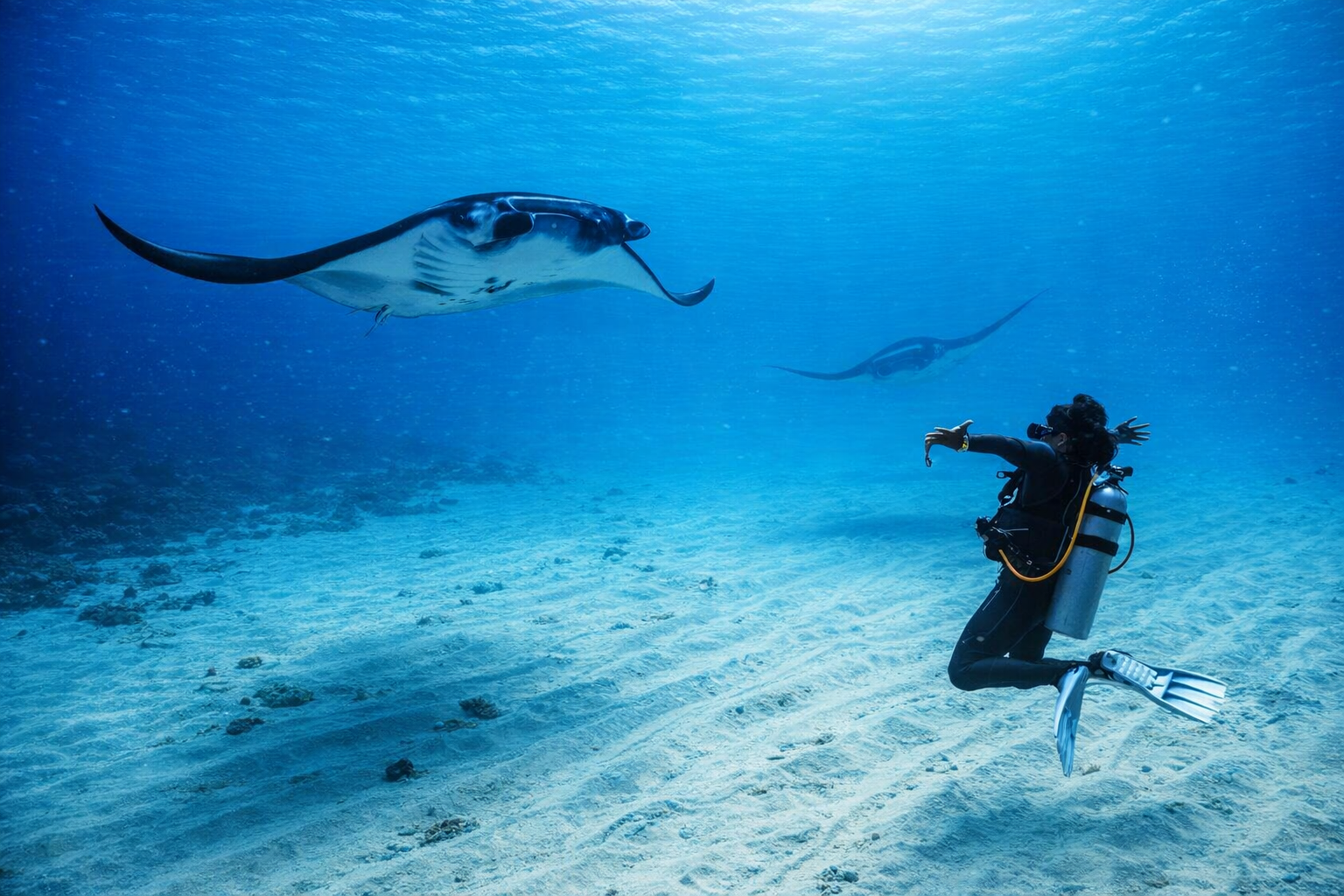
Explore Bali's underwater paradise with zero experience required—two guided dives with manta encounters
9 hours
Free Cancellation
Explore Bali's legendary USAT Liberty wreck on a beginner-friendly dive, then kayak along Amed's coast
5 hours
Free Cancellation
Discover underwater Bali with a personal instructor, pool training, and two ocean dives at iconic sites.
8 hours
Free Cancellation
Discover Bali's underwater treasures on a relaxed half-day diving experience with expert guides
Safety briefing and gear fitting
Travel to coastal reef sites
Exploration of reef topography
Rest and light refreshments
Secondary reef site inspection
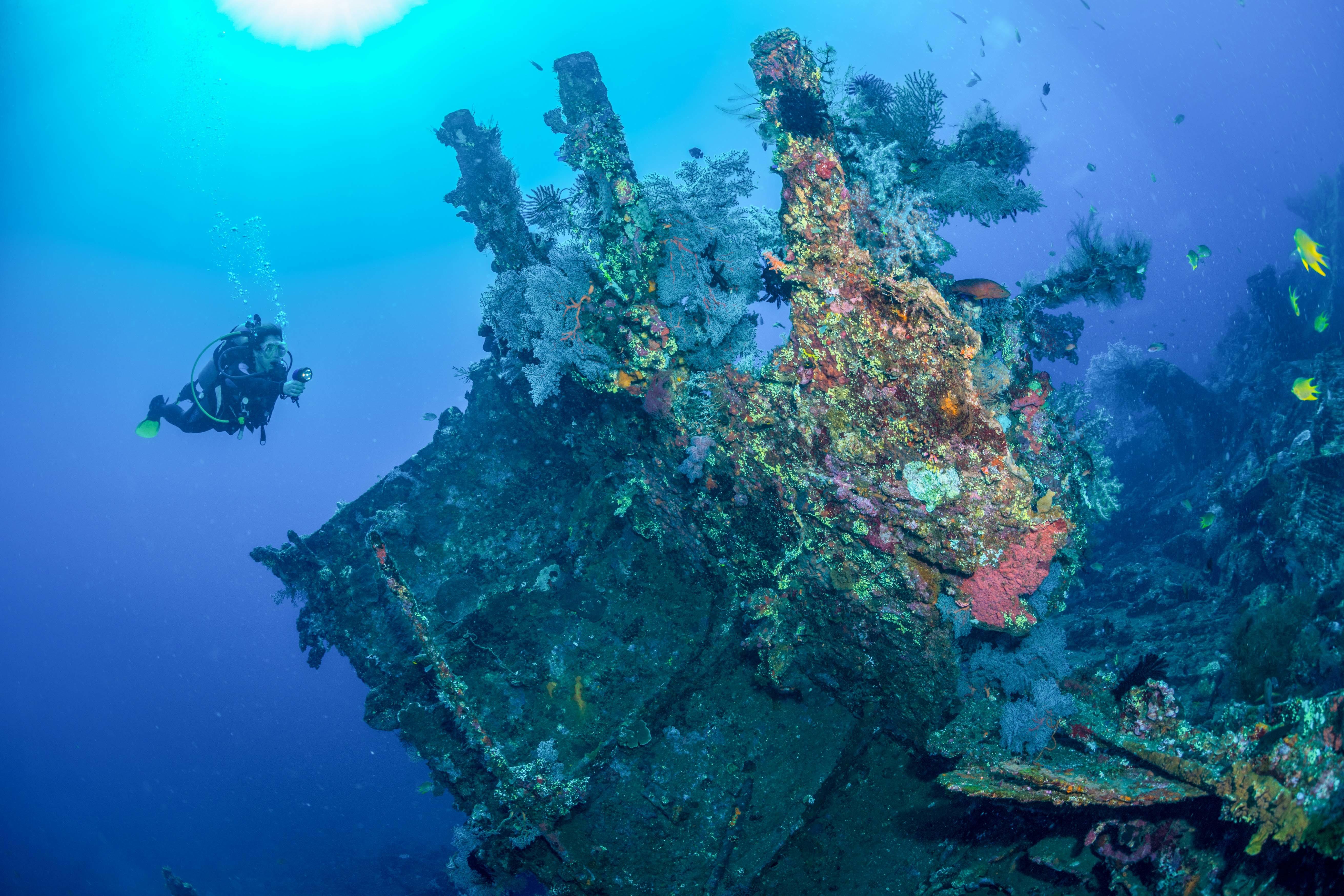
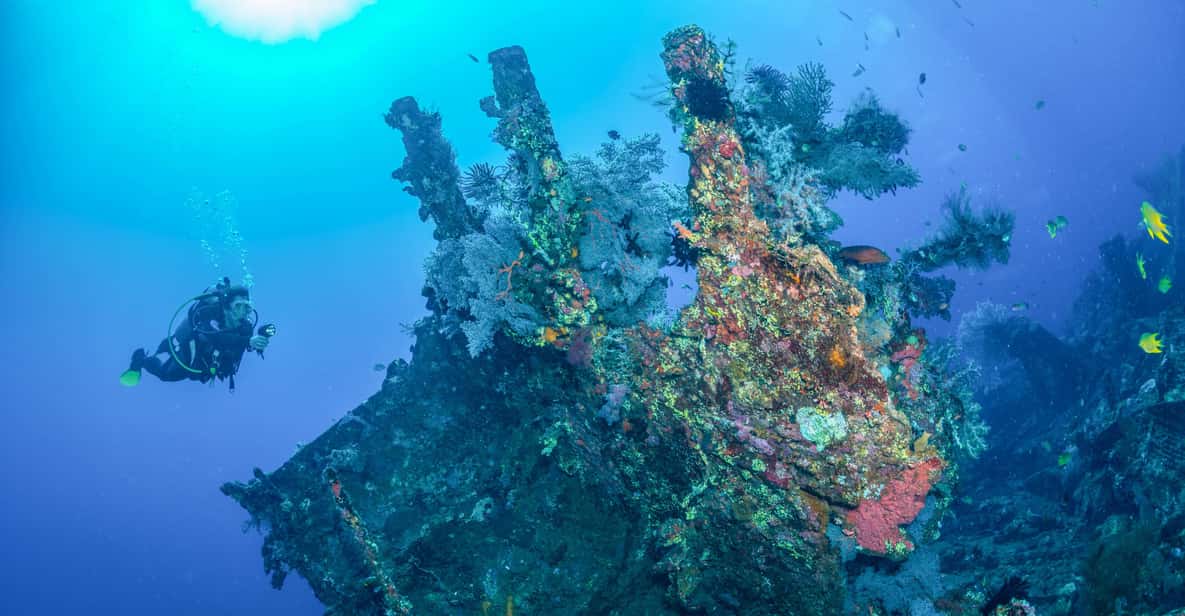
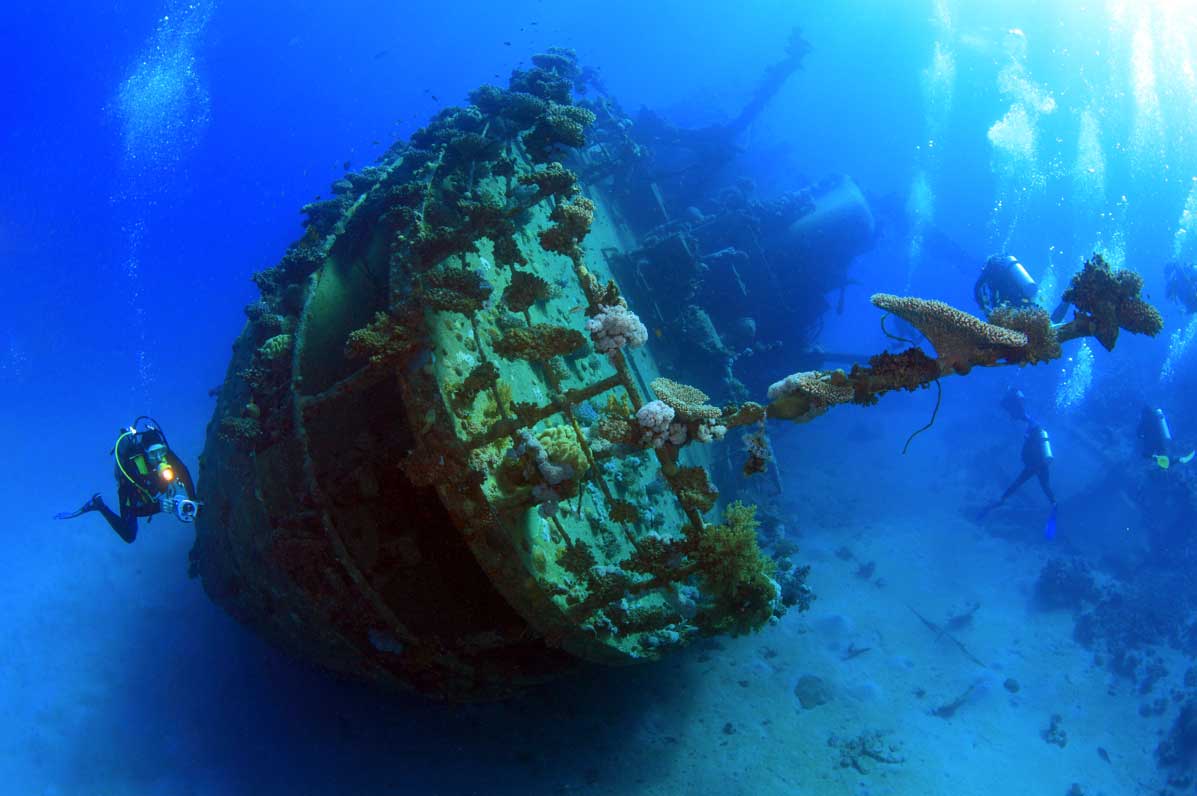
This iconic WWII wreck rests in shallow water, making it accessible for all levels. The vessel is encrusted with colorful coral and home to large schools of fish.
These shallow reef structures feature a high density of soft corals and crustaceans. It is a prime location for macro photography enthusiasts.
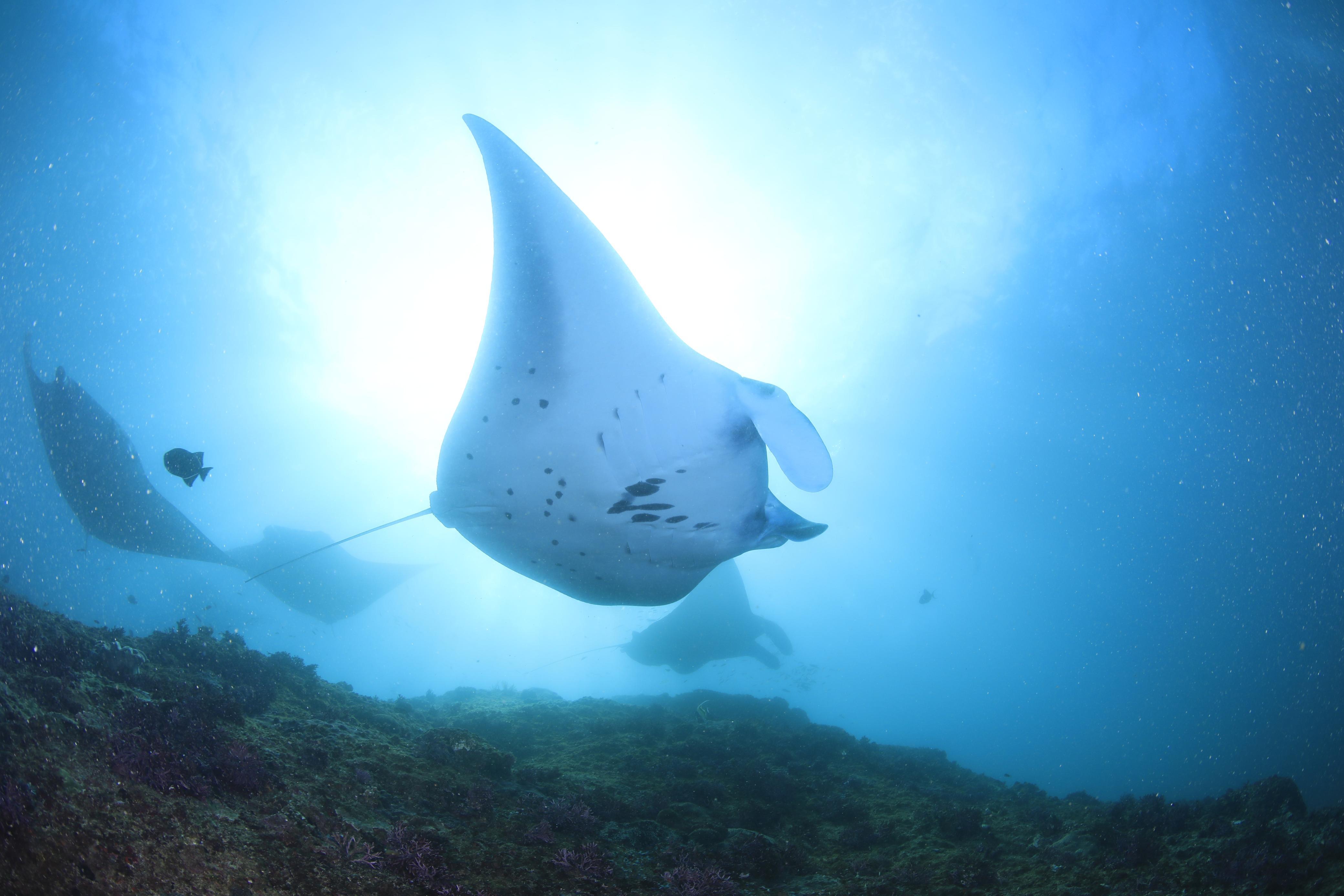
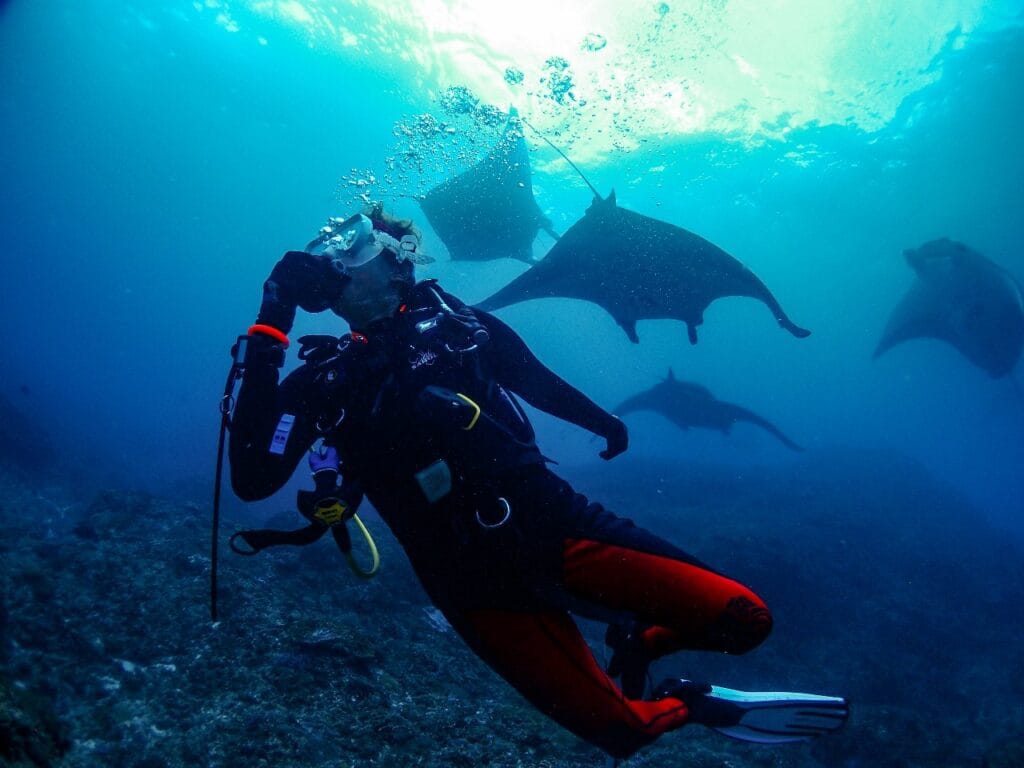
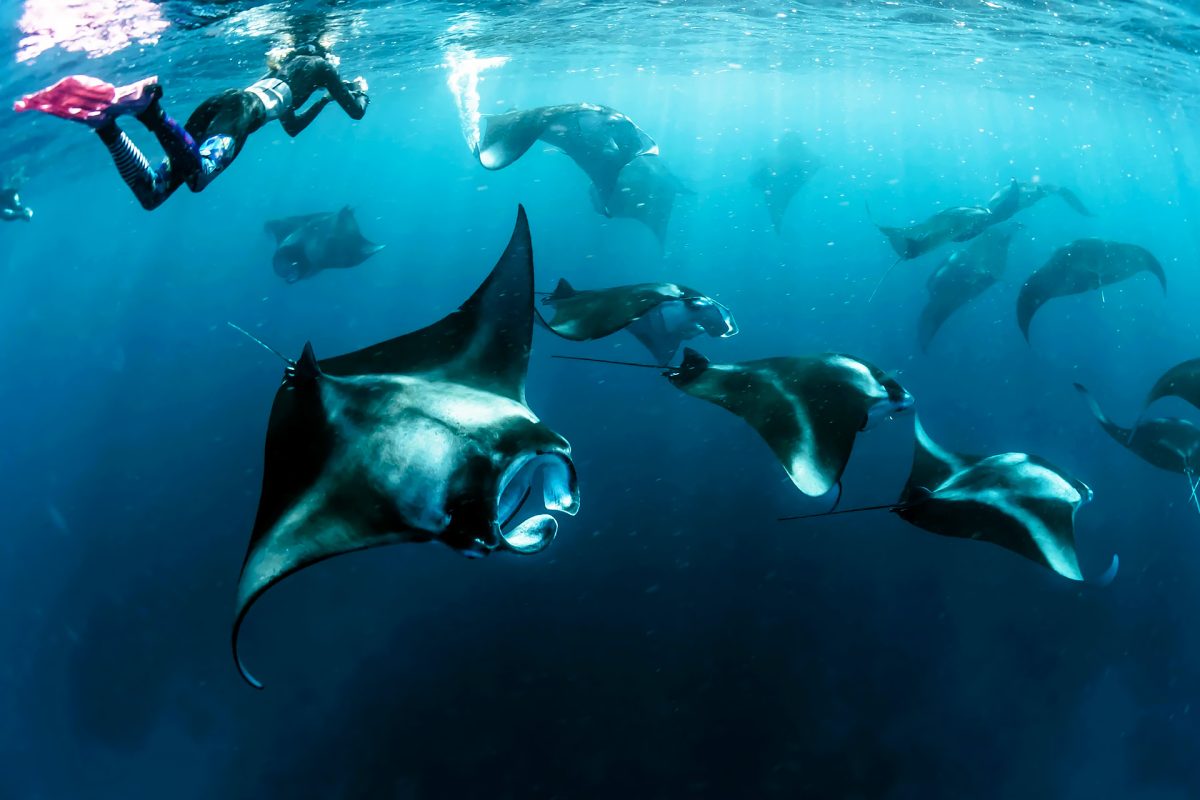
Known for resident manta ray populations, this site offers reliable wildlife encounters. Current conditions here require careful observation of water movement.
This site is famous for its clear water and potential sightings of the elusive mola mola during the season. The reef slope offers deep, cool water pockets.
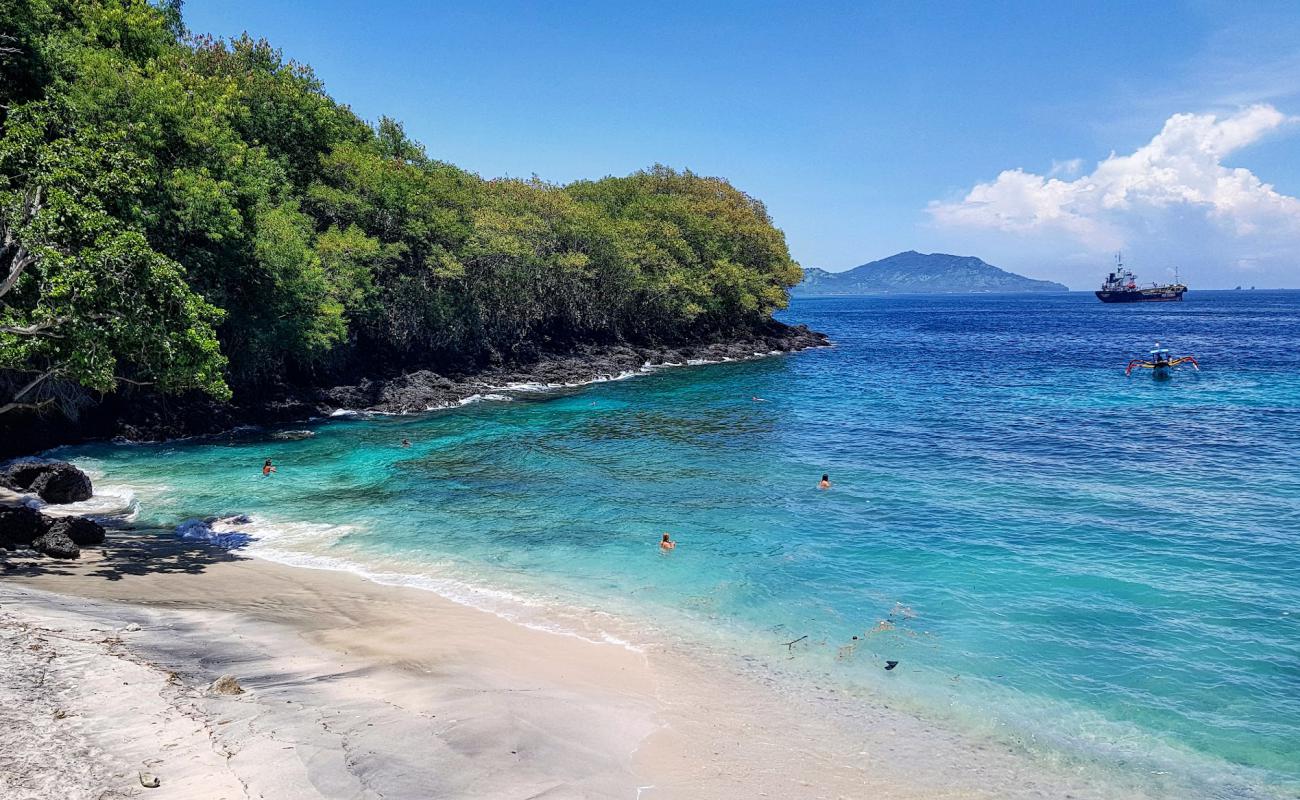
This sheltered bay features a white sandy bottom and diverse marine life. It is frequently visited by those seeking a calm environment for their first dives.
You meet your dive guide at 08:00, loading twin aluminum tanks into a jukung—a traditional outrigger canoe—on Tulamben's pebble beach. The boat motor cuts after a three-minute ride, and you roll backward into 26-degree water above the Liberty wreck.
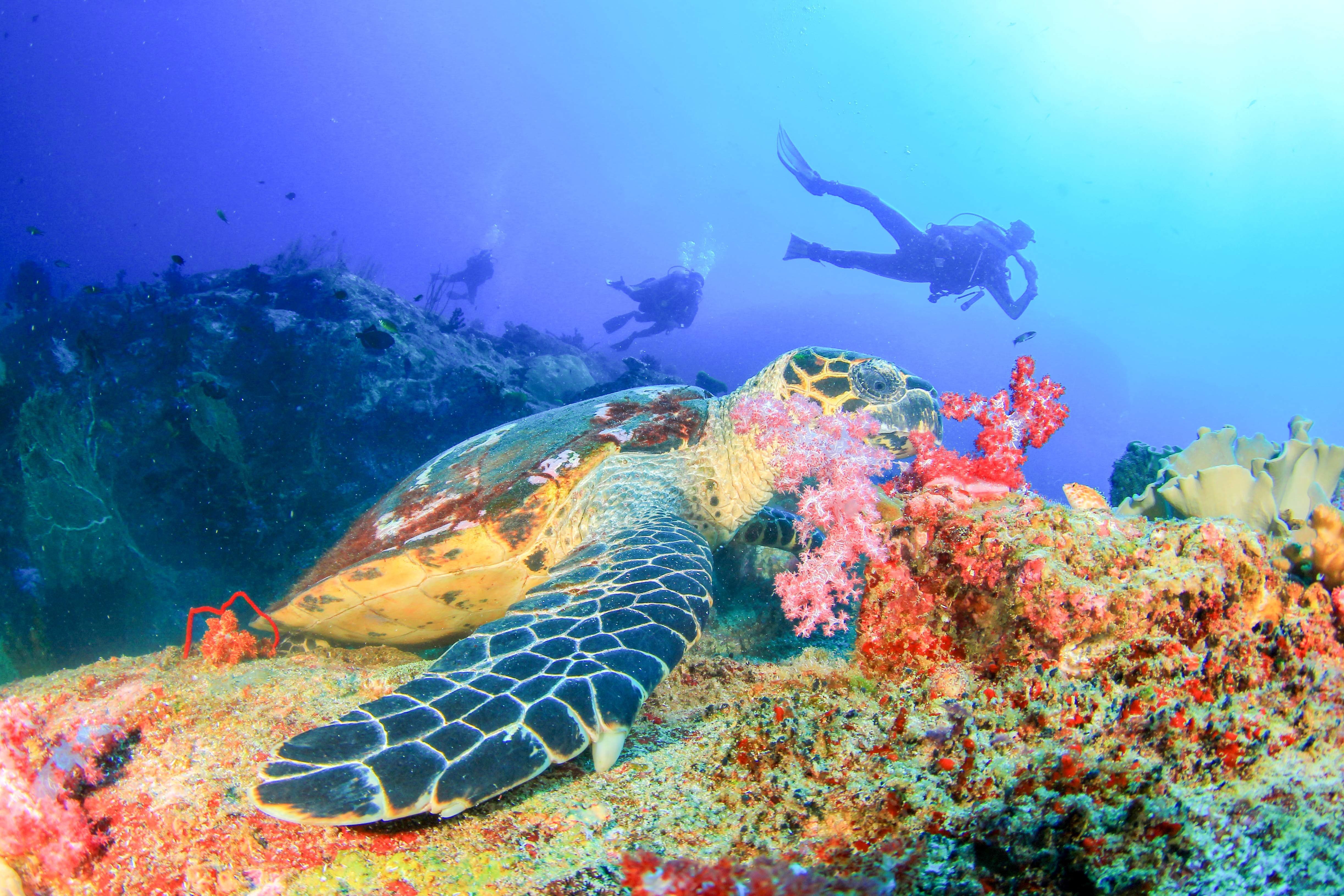
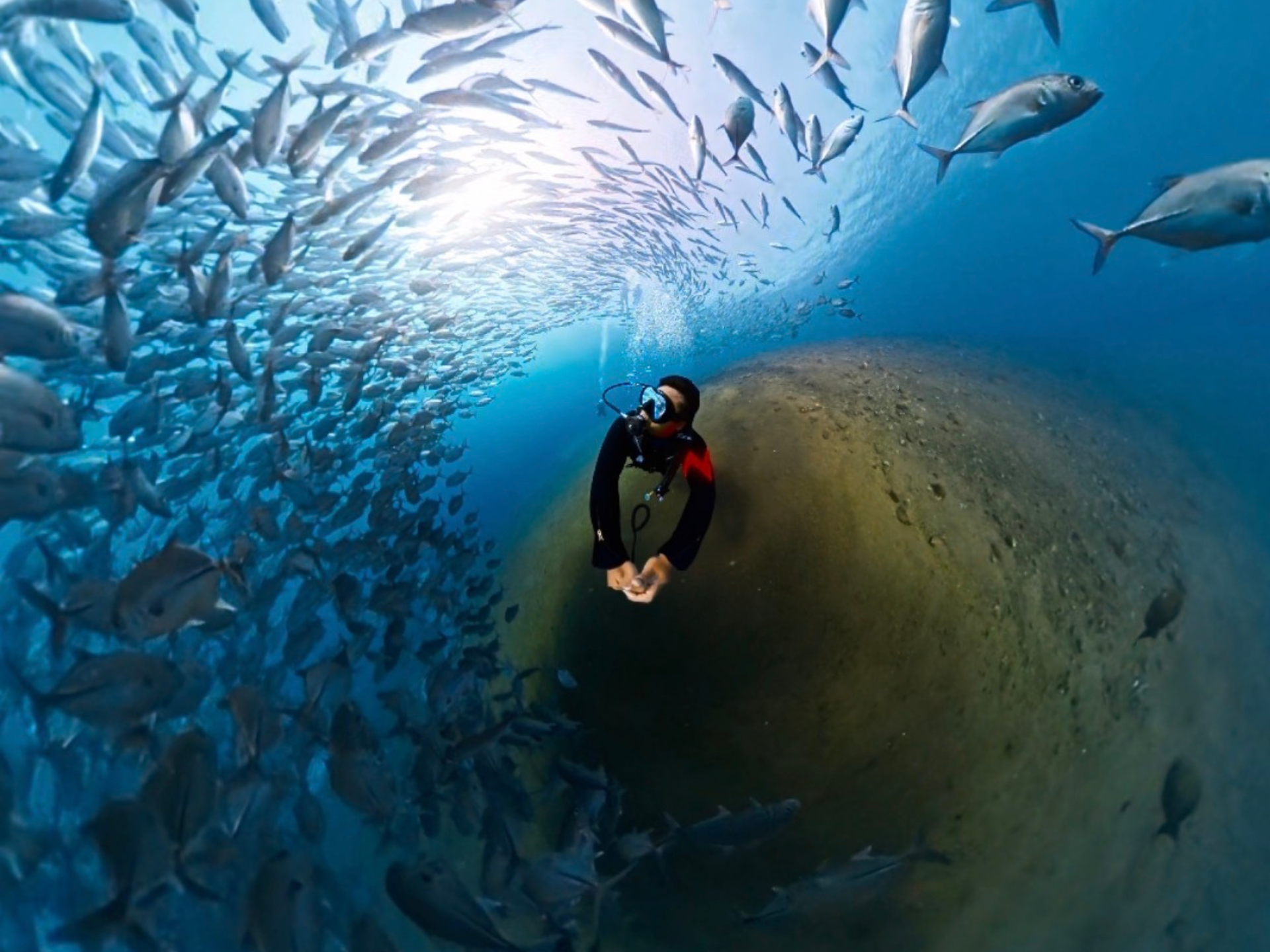
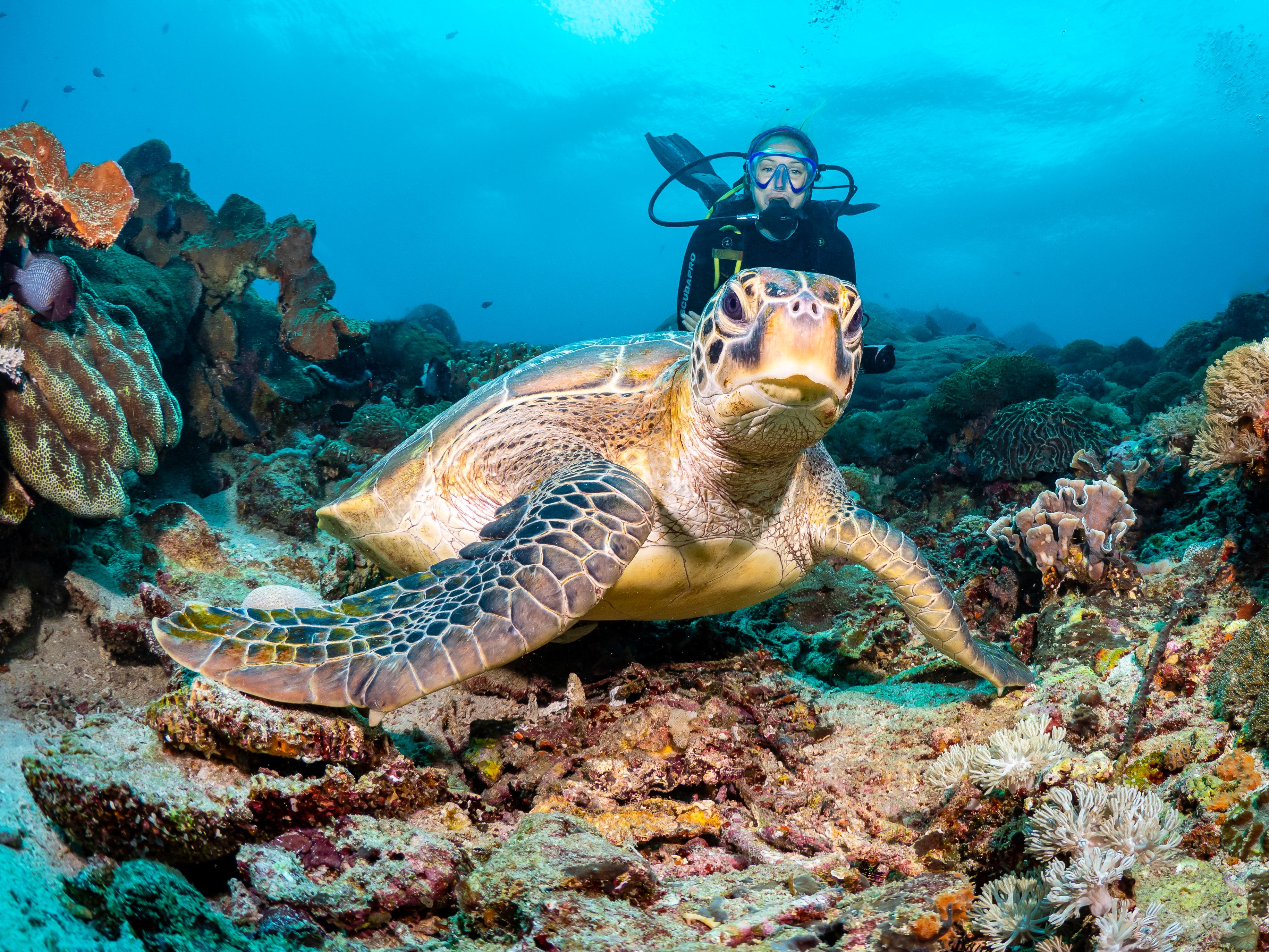
Descending the slope, the ship's bow materializes at 12 meters: encrusted cannon, a broken mast, schools of bigeye trevally circling the superstructure. You fin along the hull, pausing where the ship's spine cracked in half—gorgonians frame the gap, and a hawksbill turtle scrapes sponges from a cargo hatch. Your guide points to a pygmy seahorse the size of a grain of rice on a red seafan.
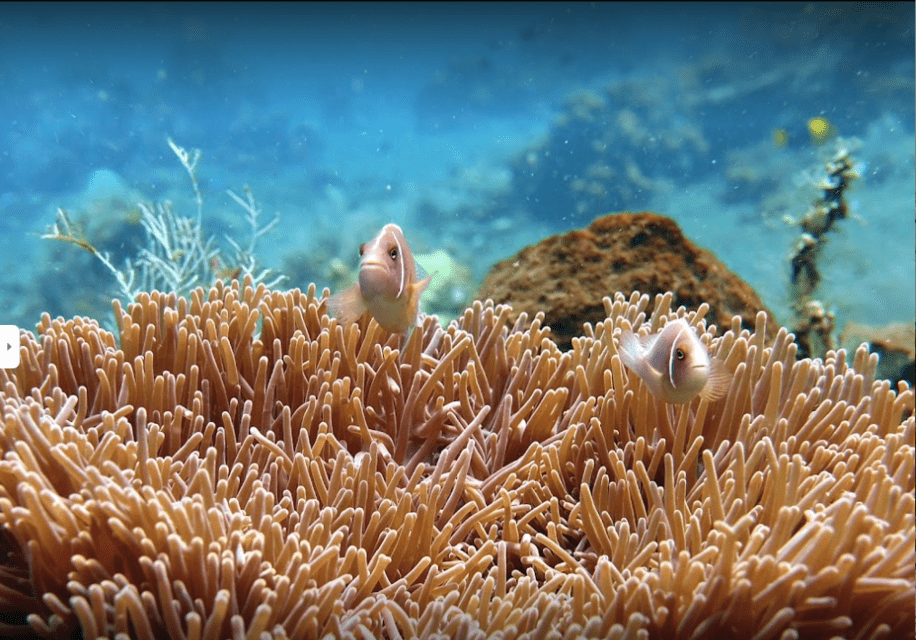
The second dive is a drift along Amed's wall. You descend to 22 meters and let the current carry you past table corals, trigger fish defending nests, a ribbon eel swaying from a crevice. The current accelerates where the wall narrows into a channel—your guide signals to duck behind a coral head, and a school of barracuda streams past overhead. Ascending along a slope covered in staghorn coral, you end the dive in a garden of anemones hosting clownfish at six meters. Back on the boat, you surface to see Mount Agung's crater above the palm line, its peak clear in the morning light before the afternoon clouds build.
All the details about your upcoming adventure in one place
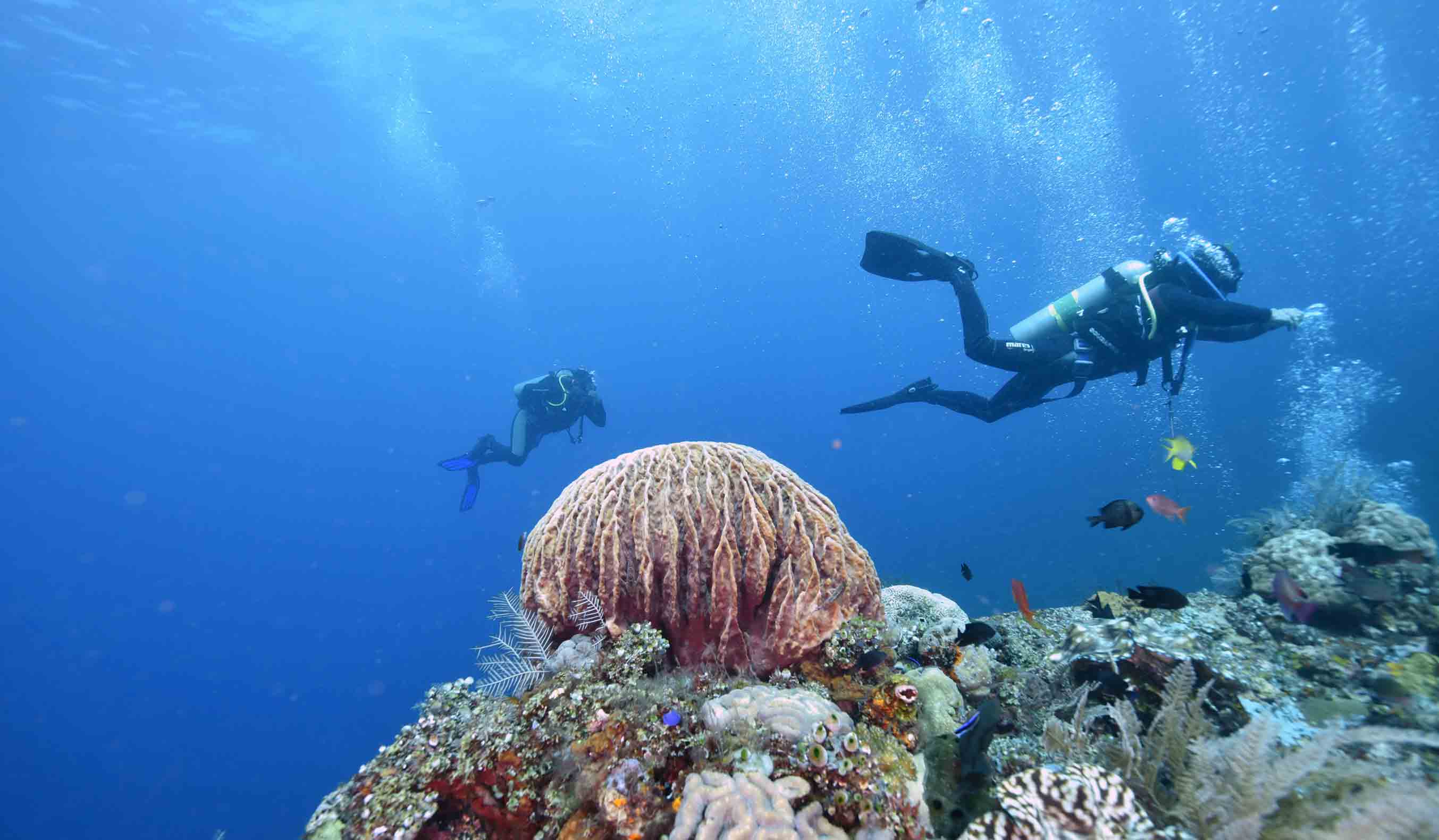
Diving in Bali offers access to some of Indonesia's most vibrant underwater ecosystems, from the coral gardens of Amed to the legendary manta rays at Nusa Penida. Whether you're exploring shipwrecks, drift diving along steep walls, or gliding through kelp forests, diving in Bali tours cater to all certification levels. Crystal-clear visibility and warm tropical waters make Bali a year-round destination for both novice and technical divers.
Bali's underwater topography was carved by the same tectonic forces that built the island's volcanic spine—the Australian Plate subducting beneath the Sunda Shelf created not only Mount Agung and Mount Batur but also the steep walls and channels that funnel nutrient-rich currents through the Lombok Strait.
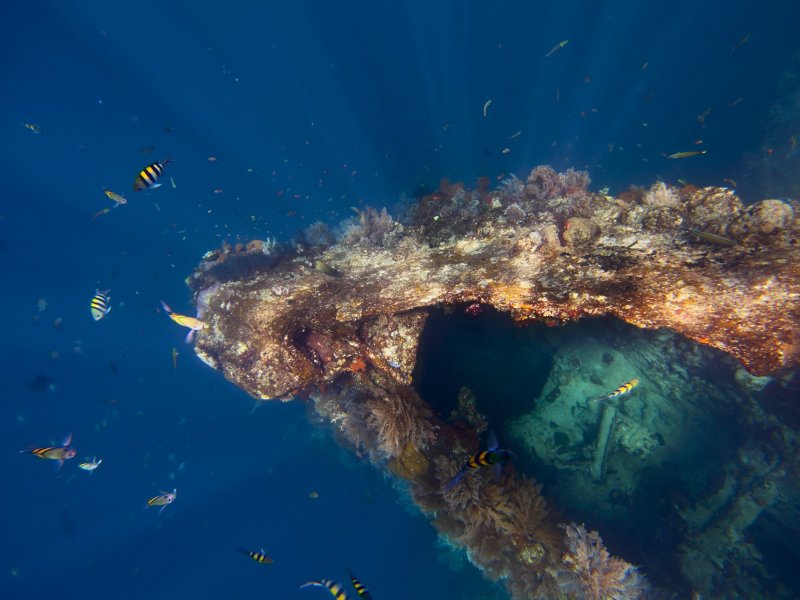
These currents, driven by the Indonesian Throughflow, carry larvae and plankton from the Pacific into the Indian Ocean, seeding Bali's reefs with biodiversity found nowhere else in Southeast Asia. The USAT Liberty, a 120-meter cargo ship torpedoed in 1942 and pushed onto Tulamben's black-sand slope by Mount Agung's 1963 eruption, now hosts gorgonian fans three meters wide and schools of bumphead parrotfish that scrape algae from its rusting hull.
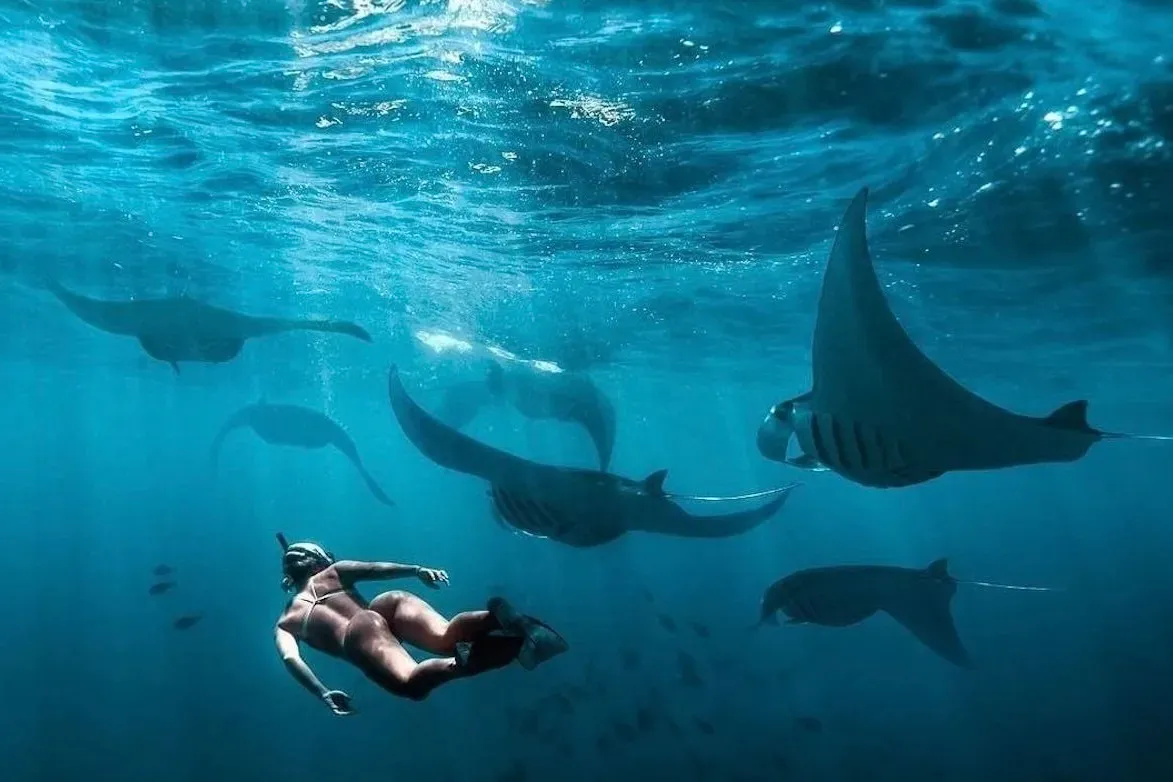
Diving in Bali spans three distinct zones. The northeast coast—Tulamben, Amed, and the Gili Selang current channels—offers macro life in volcanic sand: pygmy seahorses the size of a fingernail cling to seafans, and mimic octopuses hunt across rubble fields at depths accessible to open-water divers. The southern peninsula, where the Bukit limestone meets deep water, is manta ray and mola mola territory: Nusa Penida's cleaning stations at Crystal Bay and Manta Point draw oceanic mantas year-round, while the bizarre ocean sunfish ascend from the thermocline between August and October. West Bali, anchored by Menjangan Island inside a national park, presents walls that plunge 60 meters, their faces covered in soft corals and patrolled by whitetip reef sharks.
Scuba diving Bali Indonesia operates on a monsoon calendar. Diving in Bali in September, October, and November brings the calmest seas and warmest water—27 to 29 degrees Celsius—with visibility routinely exceeding 30 meters on the east coast. Diving in Bali in December and through the wet season sees afternoon squalls but also concentrations of pelagic species along the south coast drop-offs. Diving in Bali in June, July, and August delivers the mola mola season, when these two-meter disk-shaped fish rise from depths below 200 meters to be cleaned by bannerfish at Nusa Penida's submerged pinnacles. Most dive operators run daily two-tank trips departing between 08:00 and 10:00 to avoid the afternoon wind that builds after midday, particularly on the east coast where the Lombok Strait funnels southeast trades. Conservation fees at sites like Menjangan and Nusa Penida range from 100,000 to 250,000 IDR per diver per day, collected at park gates or by dive centers on behalf of local communities.

The USAT Liberty, pushed onto Tulamben's slope by Mount Agung's eruption, now hosts gorgonian fans three meters wide.
Divers should arrive in comfortable beachwear. Wetsuits are typically provided by operators, but bring your own swimwear to wear underneath.
Keep belongings minimal as space on dive boats is restricted. Lockers are rarely provided at docks, so leave valuables in your secure accommodation.
Underwater cameras are permitted at all sites. Ensure your housing is properly sealed before entering the water.
Minimum age requirements for scuba diving in Bali typically start at 10 years old for junior certification. Supervision by a certified instructor is mandatory for all minors.
Many dive boats lack wheelchair ramps or specialized lifts. Guests with mobility concerns should contact their specific operator to discuss site-specific entry requirements.
Most diving in bali tour packages include water and light snacks. Consuming alcohol before diving is strictly prohibited for safety reasons.
Opening Hours
08:00–18:00
Address
Bali, Indonesia
Physical Access
Conditions vary by site
Best arrival
08:00–10:00
Storage
Not available
Navigation
Local operator coordination required
Taxi · varies · Variable
Direct transfer to dive centers is standard. Ensure your driver knows the specific boat launch location.
Private Car · varies · Variable
Rental vehicles provide the most flexibility. Parking is limited at most coastal departure points.
Full refunds are typically provided for cancellations made 48 hours prior to the scheduled dive. Note that individual sites may require local conservation fees which are often non-refundable.
Recommended time
Full day
Planning your diving in bali requires accounting for significant travel time between coastal hubs such as Amed and the popular sites around Nusa Penida. Most excursions necessitate multiple dives separated by surface intervals to ensure safety, making these diving in bali tours a time-intensive commitment. While you may seek diving in bali tickets for specific marine parks, remember that logistics often dictate your pace. Expect crowds to peak by midday as boat traffic increases, so consider that early departures are often preferred to manage underwater congestion.
Crowd levels through the day
Weather · crowds · average price — dots go green to amber to red as each metric rises.
Warm water temperatures with lower precipitation levels. Visibility is generally high during these months.
Cooler water temperatures occur due to thermoclines. Surface winds may increase during this period.
Excellent conditions for spotting manta rays and mola mola. Stable weather persists throughout this transition.
Expect higher humidity and potential rain. Surface conditions can become choppy, affecting some offshore sites.
Ensure you monitor your air pressure frequently. Shallow waters often lead to faster gas consumption.
Always deploy your surface marker buoy. This alerts boat captains to your position when surfacing.
The story of diving in Bali begins not with tourism but with tragedy. On January 11, 1942, the USAT Liberty, a United States Army cargo ship carrying rubber and railway parts, was torpedoed by the Japanese submarine I-166 roughly 15 miles southwest of Lombok Strait. The crew abandoned ship, and two U.S. Navy destroyers attempted to tow the crippled vessel to Singaraja on Bali's north coast. The Liberty never made it. She was beached at Tulamben on Bali's northeast shore, where she sat partially above water for over two decades, a rusting monument to wartime violence in the Pacific. Everything changed in 1963 when Mount Agung erupted with catastrophic force, killing more than a thousand people and reshaping the island's northeastern coastline. Tremors from the eruption pushed the Liberty wreck off the beach and into the sea, where she settled at depths ranging from five to thirty meters. The ship broke apart as she sank, scattering boilers, cargo holds, and structural beams across the volcanic sand. Within years, hard corals colonized the steel hull, and reef fish moved in. By the 1970s, divers began exploring the site, drawn by the accessibility and the eerie beauty of a war relic transformed into an artificial reef. Today the Liberty wreck anchors Bali's reputation as a world-class dive destination. The site requires no boat; divers wade in from Tulamben's black-sand beach and descend along a gentle slope to reach the bow, stern, and midship sections. Gorgonian fans cling to gun mounts, and schools of jacks circle the superstructure at dawn. Conservation fees fund reef monitoring, but the wreck itself remains unregulated, its steel frame slowly dissolving into the sea that claimed it eighty-four years ago.
USAT Liberty torpedoed by Japanese submarine I-166 and beached at Tulamben.
Mount Agung eruption pushes the wreck underwater, where it settles at 5–30 meters.
Recreational divers begin exploring the Liberty wreck as an accessible shore dive.
Hard corals and reef fish colonize the steel hull, establishing an artificial reef ecosystem.
Tulamben emerges as a hub for diving in Bali tours, with the Liberty wreck as the flagship site.
The wreck remains a heavily visited dive site, with conservation fees supporting reef management efforts.
Post-dive recovery centers around beachside warungs found near popular sites for diving in bali. These local eateries offer a relaxed setting to enjoy Indonesian staples after participating in one of the many available diving in bali tours.
Located near prime coastal access points, this spot is ideal for a post-excursion meal. Guests frequently order the fresh grilled fish and nasi goreng while reviewing underwater photography from their diving in bali tour.
Real experiences from real travelers
We spent four days exploring sites around Tulamben and Amed. The USAT Liberty wreck is extraordinary, completely overtaken by coral and teeming with macro life. Our guide spotted three different pygmy seahorses and a frogfish. Water temperature was comfortable at 27 degrees, visibility around 20 meters most days.
Dove Manta Point twice during our trip and saw mantas both times. The drift can be strong so this isn't for beginners, but the payoff is worth it. Our operator from Sanur handled logistics smoothly. Saw six mantas on the second dive, including one cleaning station interaction that lasted several minutes.
Spent a week doing muck diving in bali at Seraya Secrets and Puri Jati. Found ghost pipefish, blue-ring octopus, several nudibranch species, and a mimic octopus hunting at dusk. Guides have incredible eyes for tiny creatures. If you're into underwater photography this region delivers.
The coral gardens near Pemuteran offered nice dives with healthy soft corals and decent fish life. We counted over a dozen other dive groups at popular sites during peak hours. Early morning dives were less congested. Operators are professional and equipment was well maintained.
Our group had mixed experience levels and diving in bali accommodated everyone beautifully. Beginners enjoyed shallow reef dives at Jemeluk Bay while advanced divers explored deeper walls and drift sites. The volcanic sand slopes around Amed are unique, quite different from typical tropical diving.
This wreck sits in shallow water just off the beach, making it accessible but also truly special. We did three dives on it and each revealed new sections. The boilers and cargo hold are covered in gorgonians. Saw large groupers, bumphead parrotfish, and a white-tip reef shark resting under the hull.
Visited in July hoping for mola mola sightings at Crystal Bay. The currents were challenging but we saw one sunfish at 18 meters during our second dive. Even without the mola the reef structure and fish density made this a memorable diving in bali experience. Strong swimmers only.
Used a Sanur-based operator for daily boat trips to different sites around the island. Briefings were thorough, safety protocols clear, equipment excellent. Dove Gili Selang, Candidasa sites, and Secret Bay for critters. The variety of marine environments within a two-hour radius is remarkable.
The Liberty wreck transforms at night. Our torches picked out Spanish dancers, hunting octopuses, and parrotfish sleeping in coral. The eerie silhouette of the wreck against the night water creates an unforgettable atmosphere. This was our fifteenth night dive and ranks among the best.
Completed my advanced open water certification during a week of diving in bali tours around Amed and Tulamben. Water stayed warm enough that a 3mm suit was comfortable. Saw turtles on nearly every dive, schools of barracuda, and countless reef fish species. The volcanic topography creates interesting underwater landscapes.
Everything you need to know for your journey
The operating hours are 08:00–18:00 every day. Guests are encouraged to plan around the best arrival window of 08:00–10:00.
There is 0 IDR standard gate fee, though local conservation fees are often required at specific sites.
The best arrival window is 08:00–10:00 to avoid afternoon winds. September is excellent for underwater visibility.
Yes, most operators require divers to be at least 10 years old. Certification levels must be verified before purchasing diving in bali tickets.
Yes, many sites are well-suited for training. Ensure you coordinate with your instructor for site suitability when looking at diving in bali tours.
Bring your certification card, logbook, sun protection, and a dry set of clothes. Avoid bringing non-essential valuables on the boat.
Transport is usually via boat or car. Most diving in bali tour operators provide pick-up services from your accommodation.
Items like spearguns and single-use plastics are prohibited. Respect the local marine environment by leaving nothing behind.
Yes, booking a diving in bali tour in advance is highly recommended to secure equipment and guides. Always confirm your reservation details.
Yes, diving in bali is possible year-round, though seasonal winds and currents can impact site accessibility.
Coastal temple located near the beach. It provides a cultural backdrop to the harbor area.
Coastal path connecting various amenities. Suitable for a quiet walk before boat departure.
Educational facility highlighting regional species. Located within reach of southern dive hubs.
High-end service near water access
Simple rooms near shore diving
Convenient base for boat trips
Join thousands of happy travelers who have discovered this incredible experience
Book Your Experience Now